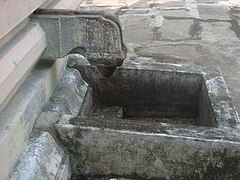
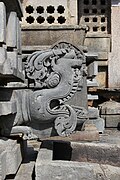
| Type | Location | Date | Style | Source |
|---|
| makara-matsya (fish) | IN-UP: Kankali Tila (now at Mathura Museum) | c. 1st century BCE-2nd century CE | probably Shaka | |
| makara-matsya | IN-UP: Mathura Museum | c. 1st century-2nd century | probably Kushana | |
| makara | IN-UP: Rajghat, Varanasi | c. 1st century-2nd century | Shaka-Kushana or Tribal | |
| simha-mukha (two pieces) | LK-7: Anuradhapura: Thuparamaya | c. 2nd-3rd century | ? | |
| grasa | IN-MH: Brick temle, Gondia | c. 5th century | Vakataka | |
| grasa | IN-MP: Tigawa | c. 5th century | Gupta | |
| grasa | IN-MP: Bhumara Temple | c. 5th century | Gupta | |
| grasa | IN-MP: Mahdia temple | c. 5th century | Gupta | |
| makara | IN-RJ: Gupta temple, Nagari | c. mid-5th century | Gupta | |
| makara | IN-MP: Gupta temple, Deogarh | c. late 5th century | Gupta | |
| makara pranalas (two pieces) | IN-UP: Sarnath Museum | c. 5th-6th century | Late Gupta | |
| grasa / matanga-makara | IN-MP: Shiva temple, Tala | c. 6th century | Post-Vakataka | |
| bhuta | IN-TN: Dharmaraja Ratha, Mahabalipuram | c. 640 | Tondainadu (Pallava) | |
| kapi (monkey) | IN-TN: Dharma-raja ratha, Mahabalipuram | c. 640 | Tondainadu (Pallava) | |
| kalamakara (vyala-makara hybrid) | VN-27: Trà Kiệu, Vietnam | c. mid-7th century | Champa | |
| makara | IN-KA: Lakulisha temple, Siddanakolla | c. 700 | Early Karnata (Chalukya) | |
| makara | IN-TG: Sangameshvara temple, Kudaveli | c. early 8th century | Karnata-Nagara: Andhra school (early Chalukya) | |
| grasa | IN-KA:Galaganatha Temple, Pattadakal | c. early 8th century | Karnata-Nagara: Alampur school (early Chalukya) | |
| grasa | IN-KA:Virupaksha (Lokeshvara) Temple, Pattadakal | c. 725-733 | Early Chalukya | |
| grasa | IN-KA:Sangameshwara Temple, Pattadakal | c. 740 | Early Chalukya | |
| matanga-nakra | IN-MP: Teli ka Mandir | c. mid-8th century | Early Gopadri | |
| damaged | IN-MH: Kailasha temple, Ellora | c. 756-776 | Early Karnata (Rashtrakuta) | |
| makara | LK-7: Anuradhapura Museum | c. 8th century or earlier | | |
| makara | LK-7: Anuradhapura (Isurumuniya) | c. 8th century | | |
| makara (graha) | ID-JT: Borobudur, Indonesia | c. 8th century | Javanese | |
| ghata held by Nagaraja | IN-AP: Madhukeshwara Temple, Mukhalingam | c. 8th century (last quarter) | Early Kalinga (Bhauma-Kara) | |
| ghata held by two vidyadharis | IN-RJ: Harshat mata temple, Abhaneri (now at Amber Museum) | c. late 8th century | Sapadalaksha (probably early Chahamana) | |
| grasa | ID-JT: Borobudur, Indonesia | c. 800 | Javanese | |
| bhuta | IN-TN: Kaveripakkam | c. 800 | Late Tondainadu (Late Pallava) | |
| makara | KH-13: Prasat Krahom, Cambodia | c. 825-875 | Cambodian | |
| makara | IN-RJ: Vishnu temple, Kusuma | c. mid-9th century | Maha-Gurjara | |
| simha | IN-AP: Nakkala gudi temple at Biccavolu | c. 9th century | Andhra Style (Eastern Chalukya) | |
| bhuta | IN-TN: Jalanatheeswarar Temple, Thakkolam | c. 875 | Late Tondainadu (Late Pallava) | |
| simha-nala | IN-TN: Apatsahayesvarar Temple | c. 884 | Cholanadu (early Chola) | |
| makara | VN-27: Mỹ Sơn, Vietnam | c. 9th or 10th century | Champa | |
| grasa | IN-KA: Akka-Tangai temple, Manne | c. early 10th century | Early Karnata (Rashtrakuta) | |
| grasa | IN-KA: Kalleshvara Temple, Bagali | c. early 10th century | Late Karnata (Chalukya) | |
| snapana-griha | IN-GJ: Trinetreshvara temple, Tarnetar | c. 10th century (2nd quarter) | Maha-Gurjara (Chapa) | |
| makara | IN-KA: Lakshmaneshvara temple, Avani | c. 934 | Nolambavadi (Nolamba) | |
| simsumara (a sea-creature) | IN-AP: Bhimeshvara temple at Bhimavaram | c. 10th century | Andhra Style (Eastern Chalukya) | |
| ghata held by a vidyadhara | IN-MP: Lakshmana Temple, Khajuraho | c. 954 | Jejakabukti (Chandella) | |
| bhuta | IN-MP: Lakshmana Temple, Khajuraho | c. 954 | Jejakabukti (Chandella) | |
| makara | KH-17: Pre Rup, Cambodia | c. 947-965 | Cambodian | |
| snapana-griha | IN-RJ: Ambika Mata Temple, Jagat, Rajasthan | c. 961 | Maha-Gurjara (Guhila) | |
| simha-nala | IN-TN: Tirunarayur Siddhanatheswarar Temple | 986 | Cholanadu (Middle Chola) | |
| makara | IN-KA: Nandappa temple, Sirwal | c. 10th century (last quarter) | Later Karnata (Chalukya) | |
| nala | IN-TN: Enadi Siva Temple | c. late 10th century | Pandinadu (Chola-Pandya) | |
| nala | IN-TN: Kandalishvara temple, Tenneri | c. 995 or earlier | Cholanadu (Later Chola) | |
| kari-makara, a hyrbid of an elephant and a makara | IN-BR: Indian Museum, Kolkata, found in Bihar | c. 10th-11th century | Early Magadha (late Pala) | |
| ghata held by a vidyadhari | IN-MP: Gurgi (Gurh); now at Ahmedabad Municipal Museum | c. 10th-11th century | Dahala (Chedi) | |
| marala-pali / ghata held by a human figure, possibly Chandesha | IN-RJ: Nagada | c. 1000 | Maha-Gurjara | |
| nala, with a lion figure at the bottom | IN-TN: Ganapati shrine, Sakalabuvaneswarar Temple complex, Tirumeeyachur | c. early 11th century | Cholanadu (Middle Chola) | |
| simha-mukha with floral ending | IN-TN: Ganapati shrine, Muyarchinatheswarar Temple complex | c. early 11th century | Cholanadu (Middle Chola) | |
| simha-mukha | IN-TN: Kailasanathar temple, Brahmadesam | c. early 11th century | Pandinadu (Chola-Pandya) | |
| ghata held by a human figure | IN-GJ: Shiva temple, Kevan (near Shravana, Sabarkantha) | c. early 11th century | Maru-Gurjara (Chaulukya) | |
| vyala | IN-KL: Vadakkunnathan Temple, Thrissur (main temple and Rama shrine) | c. early 11th century | Middle Kerala | |
| makara | IN-KA: Jain Temple, Lakkundi | 1008 | Later Karnata (Chalukya) | |
| bhuta | IN-TN: Brihadisvara Temple, Thanjavur | 1010 | Chola | |
| nala with makara | IN-KA: Galageshvara temple, Galaganatha | c. 1025 | Later Karnata (Chalukya) | |
| makara | IN-GJ: Mahavira marble temple, Kumbharia | c. 1062 | Maru-Gurjara style | |
| ? | IN-MP: Udayeshvara temple, Udaipur, Madhya Pradesh | c. 1080 | Malava (Paramara) | |
| simha-nala | IN-TN: Varadaraja Perumal Temple complex - Amman shrine | c. 11th century | Cholanadu (Middle Chola) | |
| simha-nala | IN-TN: Varadaraja Perumal Temple complex - Shrine No. 1 | c. 11th century | Cholanadu (Middle Chola) | |
| vyala | IN-KL: Rama temple, Triprayar | c. 11th century CE | Middle Kerala | |
| makara | IN-RJ: Chandravati temple | c. 11th century | Maru-Gurjara style | |
| makara | IN-MP: Bhojeshwar Temple, Bhojpur | 11th century | | |
| makara | IN-MP: Bijamandala mosque, Vidisha | c. 11th century | Malava (Paramara) style | |
| makara | IN-MP: Adinatha temple, Khajuraho | c. 11th century (3rd quarter) | Jejakabukti (Chandella) | |
| ghata held by a vidyadhara or Chandesha | IN-MP: Indore Museum | c. late 11th century | Malava (Paramara-Guhila) | |
| kari-makara | IN-BR: Munger, now at Patna Museum | c. 11th-12th century | Late Magadha style, possibly from the Sena period | |
| simha-nala, with bhuta supporting the pranala from below | IN-TN: Amirthakadeswarar Temple, Melakadambur | c. 1110-1113 | Cholanadu (Chola, Late phase) | |
| makara | IN-KA: Lakshmi Devi Temple, Doddagaddavalli | 1112 | Later Karnata (Hoysala) | |
| makara | IN-KA: Chennakeshvara Temple, Marale | 1130 | Later Karnata (Hoysala) | |
| simha-mukha | IN-TN: Airavatesvara Temple | 1146-1172 | Cholanadu (Late Chola) | |
| simha | IN-TN: Airavatesvara Temple complex - Daivanayaki-Amman shrine | 1146-1172 | Cholanadu (Late Chola) | |
| nala | LK-7: Shiva Devale No. 1, Polonnaruwa | c. 12th century | Later Cholanadu (Later Chola) | |
| makara, with a bhuta below, and a goddess above | IN-AP: Bhavannarayana temple, Sarpavaram | c. 12th century | Later Andhra (Eastern Chalukya) | |
| simsumara (a sea-creature) | IN-AP: Mandavya-Narayana temple at Samalkota | c. 12th century | Late Vengi (Eastern Chalukya) | |
| makara | IN-GJ: Jina Ajitanatha, Taranga | c. 1165 | Maru-Gurjara style | |
| matanga-makara (elephant-makara) | IN-AP: Varaha Lakshmi Narasimha temple, Simhachalam | c. 1238-1268 | Andhra-Kalinga style (Ganga) | |
| makara | IN-MH: Gondeshwar Temple, Sinnar | c. 13th century | Seuna-desha style | |
| makara | IN-MP: Bhoramdeo Temple, Madhya Pradesh | c. 13th century | Dahala-Andhra (Chedi-Kakatiya) style | |
| nakra (crocodile) | IN-OR: Chayadevi temple within the Konark Sun Temple complex | c. 13th century | Later Kalinga (Ganga) | |
| matanga-makara or saunda-makara (elephant-makara hybrid) | IN-OR: Chayadevi temple within the Konark Sun Temple complex | c. 13th century | Later Kalinga (Ganga) | |
| nandi | IN-AP: Koteshwara Temple, Srikakulam | c. 15th century | Vijayanagara | |
| nala | IN-TN: Vaishnava temple, Srimushnam | c. 15th century | Nayaka | |
| nala with vyala leaping from lion's mouth | IN-TN: Amman shrine, Ambika temple complex, Kalakadu | c. late 15th century | Nayaka | |
| simha-nala | IN-TN: Avudaiyarkoil temple | c. late 15th or early 16th century | Madurai Nayaka | |
| simha-nala | IN-TN: Sattainathar Temple, Sirkazhi | c. 15th-16th century | Thanjavur Nayaka | |
| nala with vyala leaping from lion's mouth | IN-TN: Bhaktavatsala temple, Cheranmahadevi | c. early 16th century | Nayaka | |
| nala with floral petals | IN-KA:Rameshvara temple, Keladi | c. early 16th century | Keladi-Nayaka | |
| nala with floral petals | IN-KA:Virabhadra temple, Keladi | c. early 16th century | Keladi-Nayaka | |
| nala with lion head at orifice, and lotus bud at the tip | IN-KA: Vitthala temple, Hampi | c. 16th century (first half) | Vijayanagara | |
| simha-nala | IN-KA: Aghoreshvara temple, Ikkeri | c. 1515-1545 | Ikkeri-Nayaka | |
| nala | IN-KA: Amman shrine, Vitthala temple complex, Hampi | c. 16th century | Vijayanagara | |
| simha-nala | IN-TN: Chandramouleeswar temple, Thiruvakkarai | c. 16th century | Thanjavur Nayaka | |
| simha-nala | IN-TN: Vedagiriswarar temple | c. late 16th century | Thanjavur Nayaka | |
| simha-nala | IN-TN: Kumbeswarar Temple, Kumbakonam | c. 16th-17th century | Thanjavur Nayaka | |
| simha-nala | IN-TN: Swaminathaswamy temple, Swamimalai | c. 16th-17th century | Thanjavur Nayaka | |
| nala | IN-TN: Raghaveshvara temple, Darasaguppe | c. 16th-17th century | Nayaka | |
| nala | IN-TN: Subrahmanya shrine, Brihadishvara temple complex, Thanjavur | c. 17th century | Nayaka | |